The Safecast field trip with TIPS students took place on Wednesday, March 16, 2022, 13:30-15:30. The event was held at the Safecast Office and FabCafe MTRL in Shibuya, Tokyo, Japan.

Safecast is an international volunteer-driven non-profit organization whose goal is to create useful, accessible, and granular environmental data. All Safecast data is published, free of charge, into the public domain under a CC0 designation.

What is citizen science, “open-source” and “open-data”? Why is community-driven environmental data building important for our future? These questions and more were tackled at the Safecast Field Trip with TIPS students.

The field trip was composed of three parts with the students split into 2 rotating groups for the second and third part. In the first part, Safecast team members Azby Brown, Joe Moross and Kelsie Stewart led a brainstorming session with all students to dig into the importance of openness in citizen science and environmental justice.


After the brainstorming session and an introduction to the Safecast mission and activities, students were split up into two teams. While one team visited the Safecast office to check out their cool gadgets and hear about the Safecast story, the second team used real Safecast geiger counters, known as the “bGeigie”, to measure the radiation levels around Shibuya themselves. Each team had a chance to do both activities in about an hour and a half total.


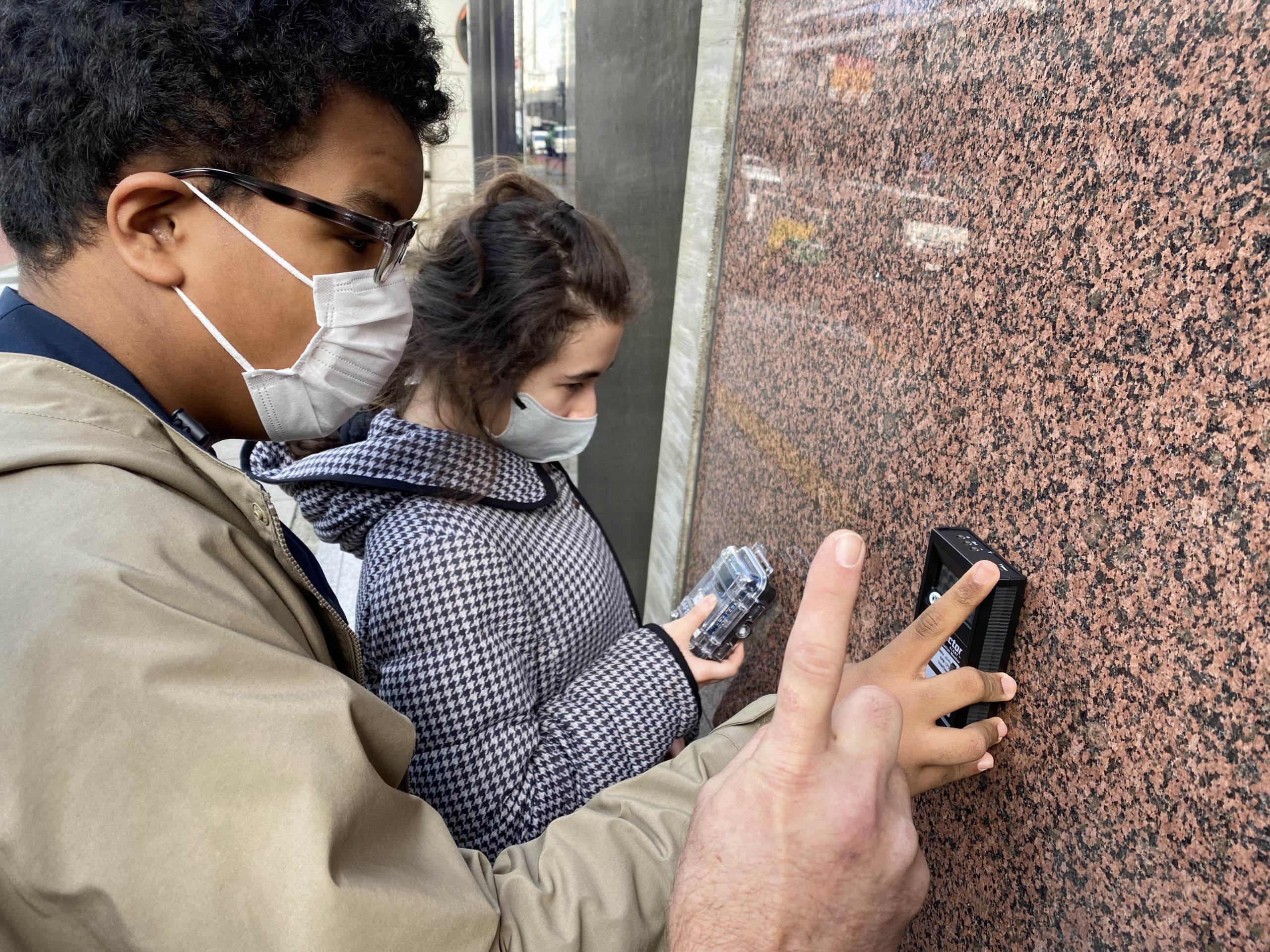
While one group of students is outside, measuring radiation around Shibuya, the other group receives a short lecture on radiation in general and especially about the situation happening in Japan following the Fukushima nuclear disaster, which was the starting point of Safecast. Safecast Lead Researcher, Azby Brown, shared about how following the Fukushima disaster, a 2011 nuclear accident at the Fukushima Daiichi Nuclear Power Plant in Ōkuma, the radiation data available to the public, among other information, was non-existent, not trustworthy, lacking or incorrect. Safecast was born to tackle this challenge.


Comments from TIPS students:
“I found it interesting that they are able to make a geiger counter that is better than the one they had at the time (2011) by collaborating with people who have a common goal.” -TIPS High School Student
“It was very interesting to learn about radioactive elements, such as traffic lights are not radioactive!” -TIPS High School Student
“As an avid supporter of open source. I find this project excellent and I would like to make a bGeigie sometime!” -TIPS High School Student
We look forward to welcoming back TIPS students to Safecast to build a kGeigie and experience some hands-on DIY workshops again!
About Safecast:
Safecast is an international volunteer-driven non-profit organization whose goal is to create useful, accessible, and granular environmental data. All Safecast data is published, free of charge, into the public domain under a CC0 designation.
After the devastating earthquake and tsunami which struck eastern Japan on March 11, 2011, and the subsequent meltdown of the Fukushima Daiichi Nuclear Power Plant, accurate and trustworthy radiation information was publicly unavailable. Safecast was formed in response, and quickly began monitoring, collecting, and openly sharing information on environmental radiation – growing quickly in size, scope, and geographical reach. Before long we began monitoring Air Quality as well. Our mission is to provide citizens worldwide with the tools they need to inform themselves by gathering and sharing accurate environmental data in an open and participatory fashion.
Safecast has deployed an innovative model of rapid integrated development, including hardware design, software design, engineering and science, visual design and communication, and social design factors. From the start, we have embraced open-source and open-data methodologies, along with new fabrication technologies, such as 3D printing, laser-cutters, and on-demand fabrication of components. We promote rapid, agile, and iterative development, and benefit from having a technically skilled pool of collaborators around the globe.
The value and credibility of Safecast data have been globally recognized. Our community is inclusive and non-partisan, comprising people of all ages and from all walks of life. Energetic outreach activities allow us to share our experiences with individuals and groups worldwide through frequent workshops, talks, and educational programs.
But most importantly, Safecast has enabled people to easily monitor their own homes and environments, and to free themselves of dependence on government and other institutions for this kind of essential information. We are happy to be playing a major continuing role in the emergence of technically competent citizen science efforts worldwide.