By Margo Cicero
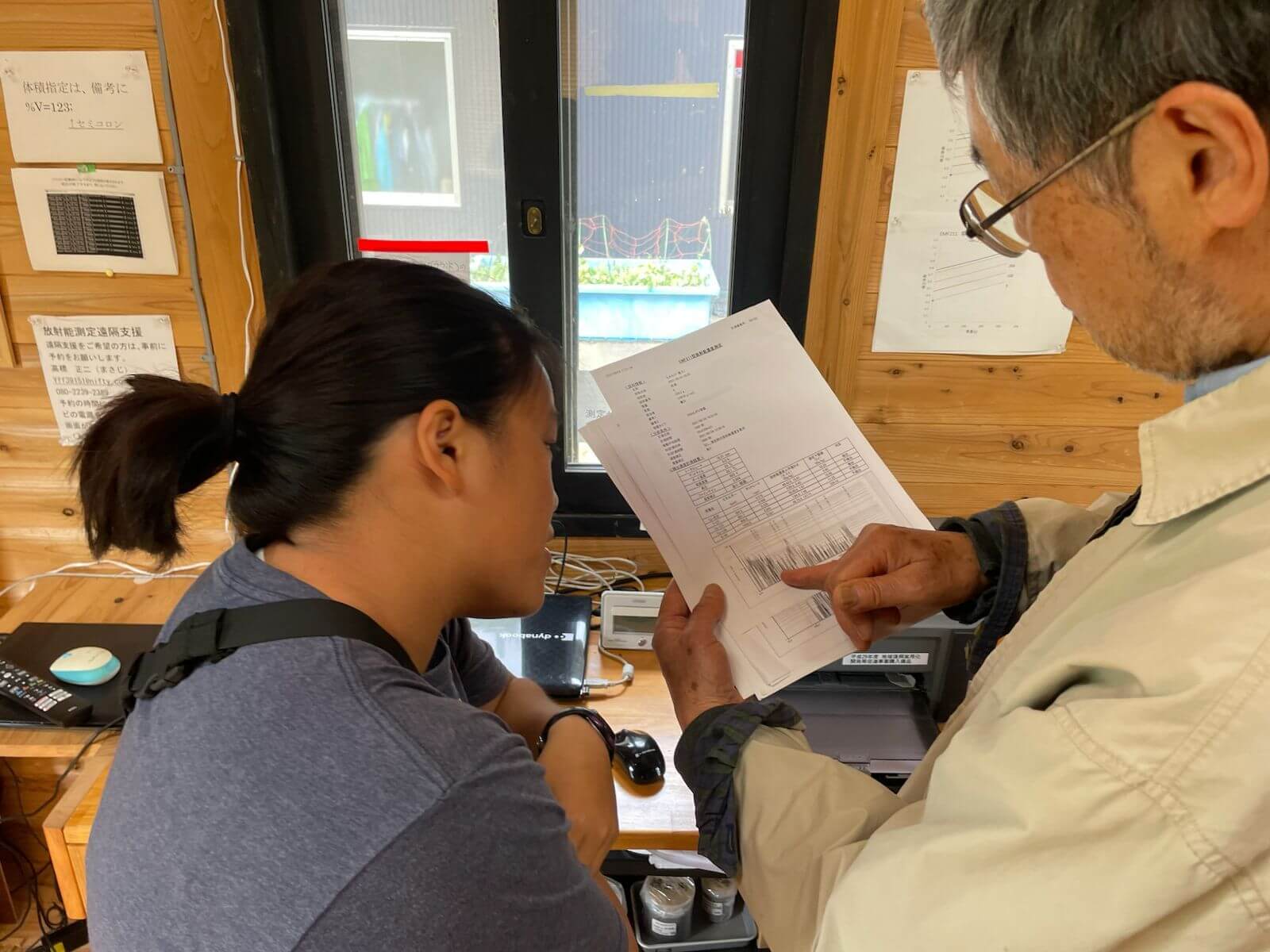
I am a rising 4th year undergraduate student majoring in nuclear engineering in the United States and interned with Safecast for one month this summer to learn about the citizen science radiation detection efforts in Japan post-Fukushima and around the world
When I stepped off the train at the Odaka station and saw a large sign displaying a radiation level reading, I knew I was somewhere different. For four days, I visited the areas around the Fukushima Daiichi Nuclear Power Plant and participated in a tour of the reactor site that caused the infamous Fukushima nuclear accident. I was moved by being in the same space in history as this disaster and learning how humanity moves forward from tragedy.
I stayed in Odaka, a small town about 40 minutes by car from the nuclear power plant. While walking around the neighborhood, there was a sense in the air of a town living in the shadow of its previous life but with a renewed purpose. There were abandoned houses with overgrown grass and vines climbing over the doorways or on the windows, empty parking lots for the town doctor’s office, and a few small businesses catering to the small population that has returned. The aura was almost haunting, an intense feeling that something bad had happened here. This feeling dissipated when I had dinner at the Futaba Ryokan, a hotel run by Tomoko Kobayashi, the heart of the current community in Odaka. Laughter, animated voices, and liveliness filled the room with Odaka locals and visitors for the Daiichi tour connecting over old and new stories–filled with the purpose of this region not being forgotten for the residents who returned to their hometown and those who are visiting out of curiosity.

On my second day, with help from Safecast, I participated in the TEPCO tour of the Fukushima Daiichi Nuclear Power Plant, organized by Karin Taira of Real Fukushima. I visited nuclear reactor units 1-4, the exact site of the hydrogen explosions that released the radiation fallout necessitating the evacuation of thousands. Although I could still see the radioactive rubble covering the melted fuel from Unit 1, I also saw the extensive work being done to decommission the nuclear site safely. We also toured the water discharge observatory where TEPCO is releasing contaminated water into the ocean after diluting it to acceptable concentrations of tritium and other radionucleides. There were many innovations of decontamination technology as a result of the accident: a debris sifting robot, an underground ice wall, contaminated water filtration, and rain-stopping pavement. One of the major takeaways from this tour was the large amount of work being done to “fix” what happened and the challenges and efforts to convince the international community of the safety of the contaminated water.

Another part of this tour was seeing the destruction from the tsunami. We visited the Ukedo elementary school where due to the teachers’ quick thinking, all students survived the tsunami by running 1.5 miles (2.4 km). I saw the damage of wrecked homes, heard stories from families who had to stop looking for their loved ones due to the evacuation order from the radiation fallout, and witnessed the revitalization efforts in farming, leisure activities, and housing developments. 14 years after the disaster, there are major efforts to incentivize people to return, like building new town centers, new houses, and helping small businesses in the area (i.e. a new winery, restaurants, and clothing stores). I was impressed with the determination to physically reinvent the spaces devastated by the tsunami into a place worth returning to.
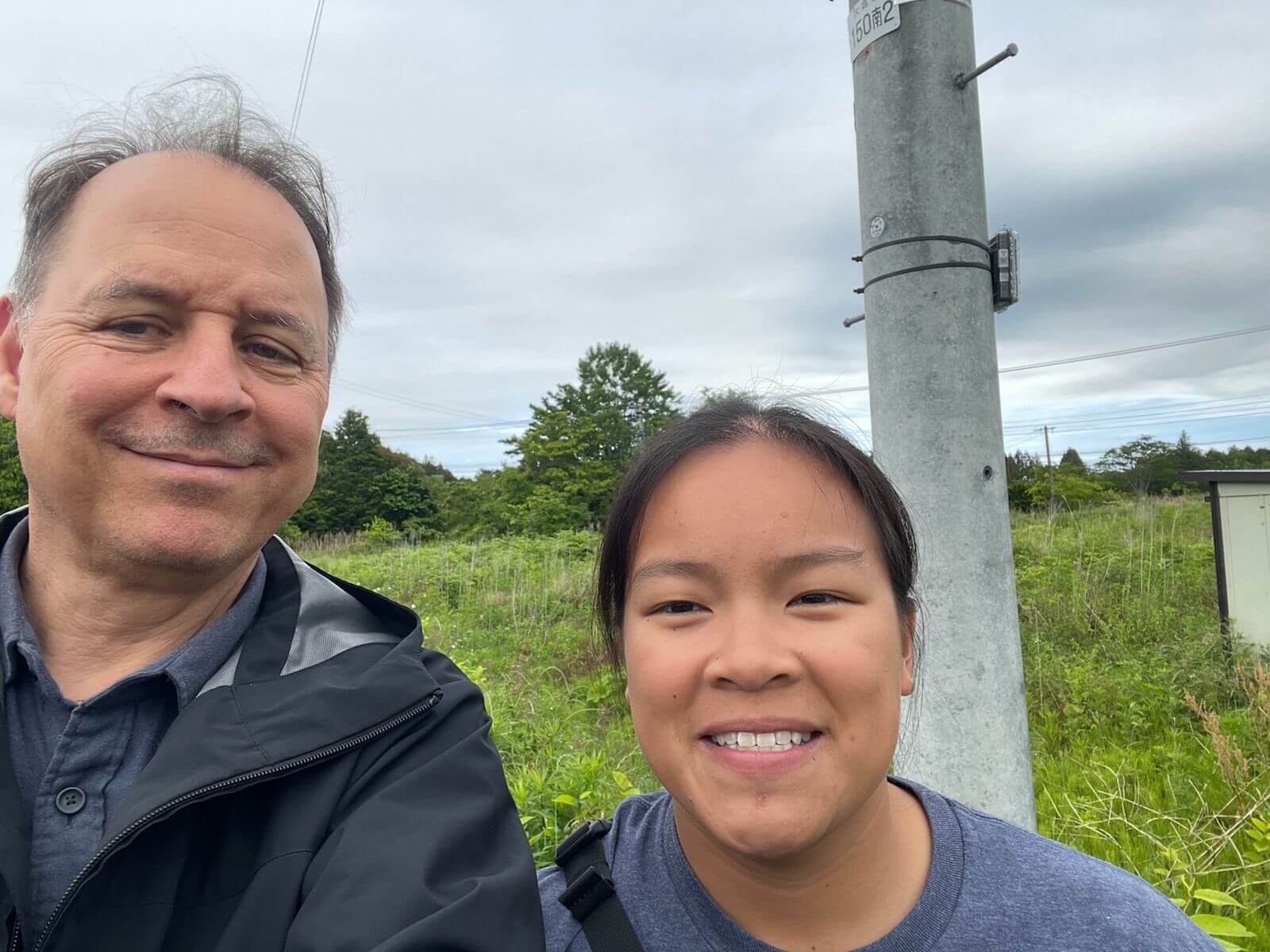
For the next two days, Safecast Lead Researcher Azby Brown and I checked the conditions of current realtime radiation detectors in different towns such as Namie and Iitate. We also placed two new Radnote realtime detectors in Obori and Tsushima, neighborhoods under this new revitalization development. I was excited to actively participate in increasing the amount of radiation data available to residents, especially in regions being prepared to welcome residents back into the area. We also took a trip to Itate to speak to Dr. Yoichi Tao and see the radiation research in this area. For 14 years, the research group he heads, Resurrection of Fukushima, has radiologically surveyed the fields, hillsides, streets, and every corner of Iitate Village, maintaining a radiation database for their town. Learning about this proactive citizen science in Iitate was inspiring, as here a community deeply affected by the disaster was united in a search for the truth through their own commitment to collecting radiation data and promoting scientific literacy.
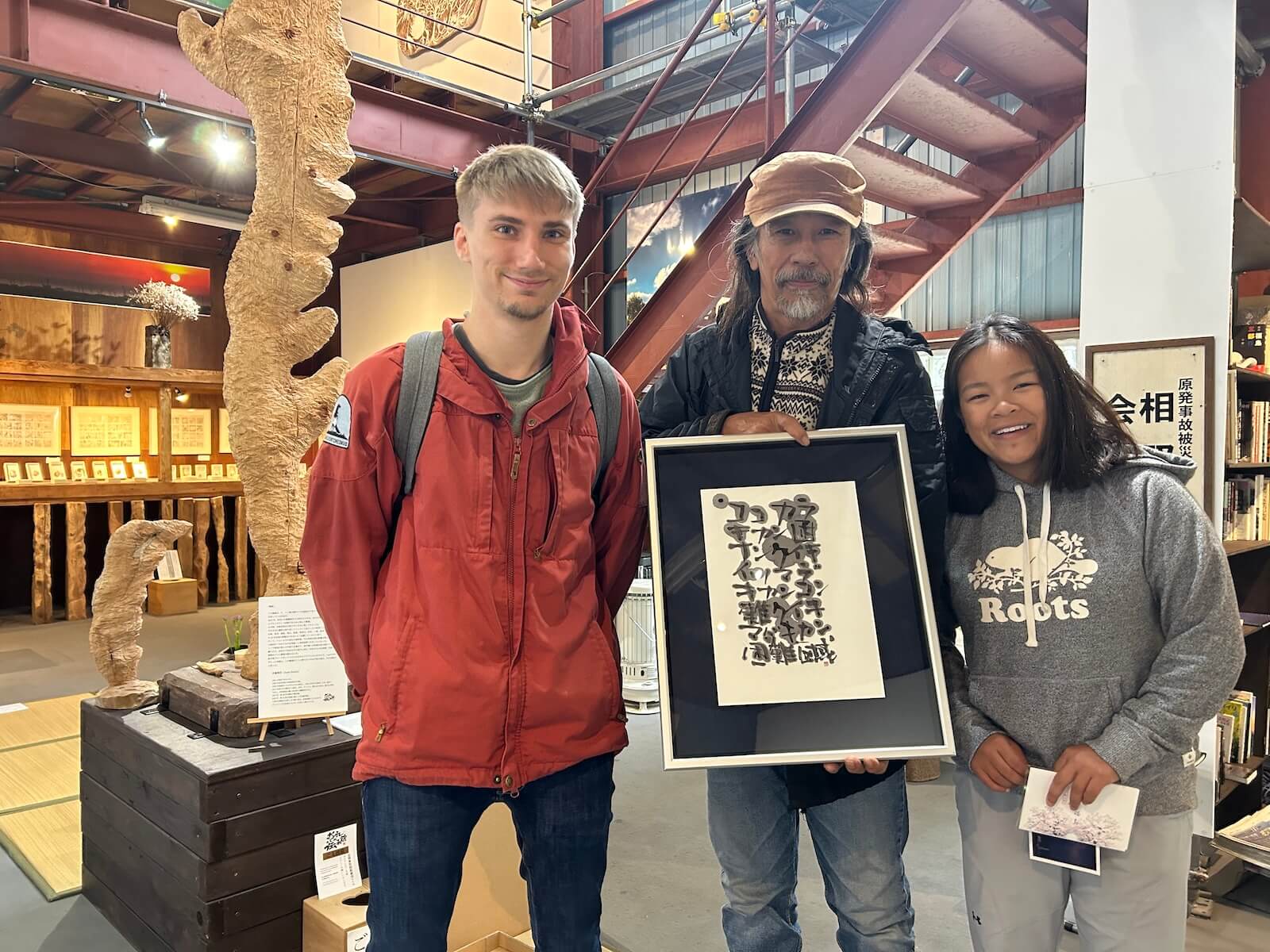
The most impactful part of this trip was learning from the residents that have returned. Heroism and drive to help were dominating storylines. A region that would have otherwise been lost to the history books are instead populated by people who have returned and are sharing their experiences through paintings, photographs, pottery, town models, and connection with foreigners and locals alike.
There is a book in the Ukedo school museum where visitors write down their thoughts. A prevailing message is the inspiration others have gained from Fukushima’s “never give up” attitude and actions. If there is something inspiring from this threefold disaster, it is the response and strength of the community to take charge of their own future and revitalize community bonds despite how few have returned.