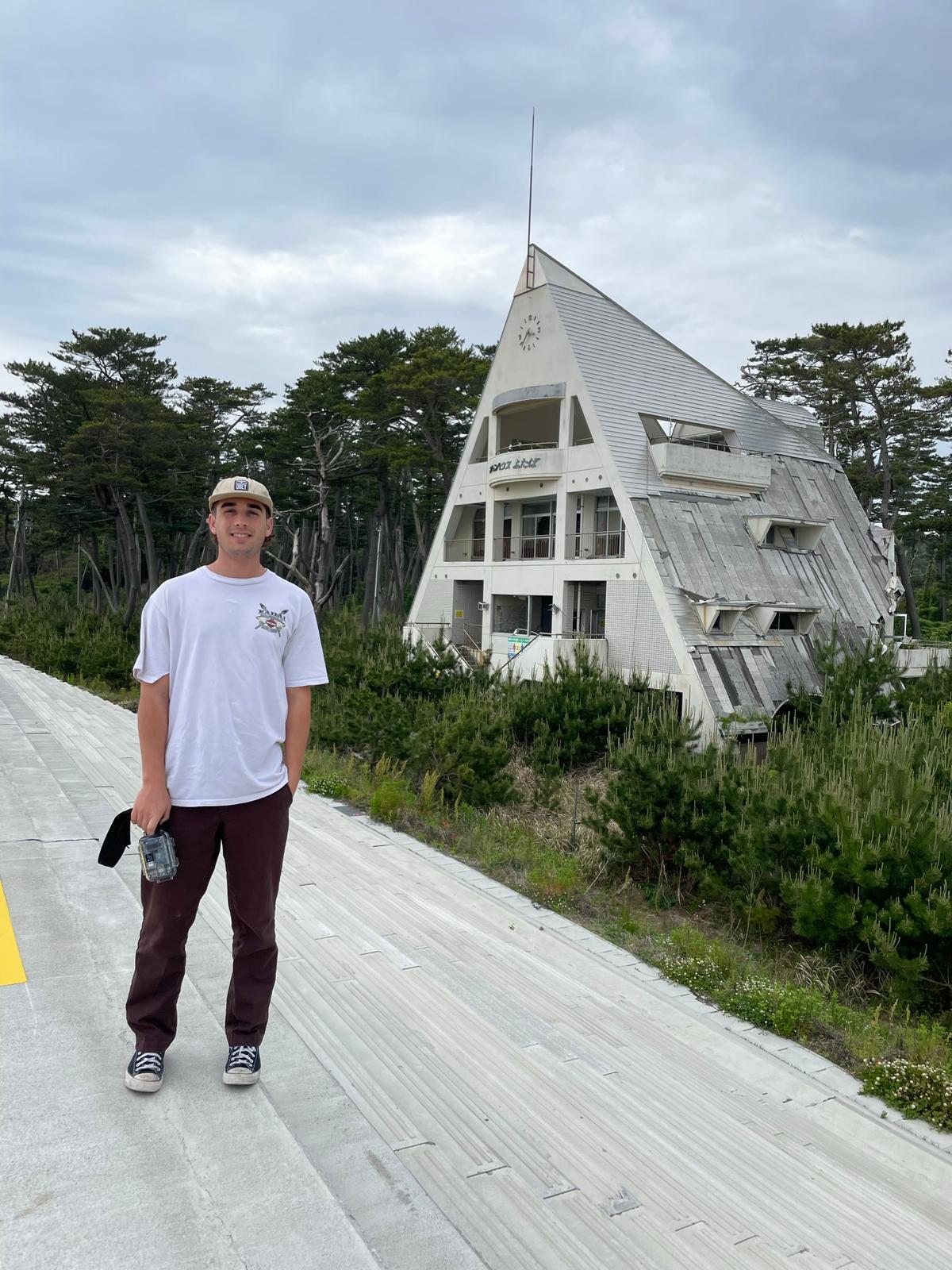
By Andrew Rocchio
In March of this year, I arrived in Japan to start my 3-month study-abroad journey at International Christian University in Mitaka, Tokyo. I am an environmental studies major at the University of California, Santa Barbara, and wanted to find an internship while I was abroad that connected to my studies. I stumbled across Safecast where I landed a perfect opportunity to get the experience I desired to further my knowledge in the field of environmental studies.
During the last weekend of May, I had the pleasure of taking a trip with Safecast Lead Researcher Azby Brown and Chief Engineer Joe Moross to Fukushima Prefecture as part of my internship with Safecast. The purpose was to conduct fieldwork that would allow me to see conditions in Fukushima for myself. Coming from California, I never thought I would get the chance to see the aftermath of the Fukushima nuclear disaster firsthand, only seeing pictures and reading articles about the horrific events that took place on March 11, 2011. Even 12 years later, the impacts from this unforgettable day are extremely evident, something I quickly noticed when arriving in the area.
The trip started off with Azby picking me up from International Christian University in western Tokyo. We then drove to pick up Joe from his house in Chiba. From there, we got on the highway and headed north to Fukushima, exiting in Naraha, and made our our way to Tomioka for a nice lunch break at a local Thai restaurant. Azby and Joe then took me to the town of Okuma where they showed me Ono Station which was closed due to the disaster until just a few years ago. We got out of the car and walked around a bit measuring radiation, and discussed a little more about the station area as well as about about Okuma and how the nuclear meltdown affected the area.
What really caught my attention when we arrived in the town of Futaba was the people, or lack of them. It was very eye opening to connect what I have read about reopening areas such as Futaba and the efforts for these areas to re-establish their communities. I thought I understood the difficulty of restoration in towns like this, but going there in person made me realize that the challenges faced there cannot be fathomed unless physically witnessed. Seeing roads that are still blocked off and buildings that have been abandoned highlights the challenges these towns face more than anything I have read. I even saw a car on the side of the road that looked like it had not been touched since the accident occurred, with all the windows shattered and grass growing all inside of it.
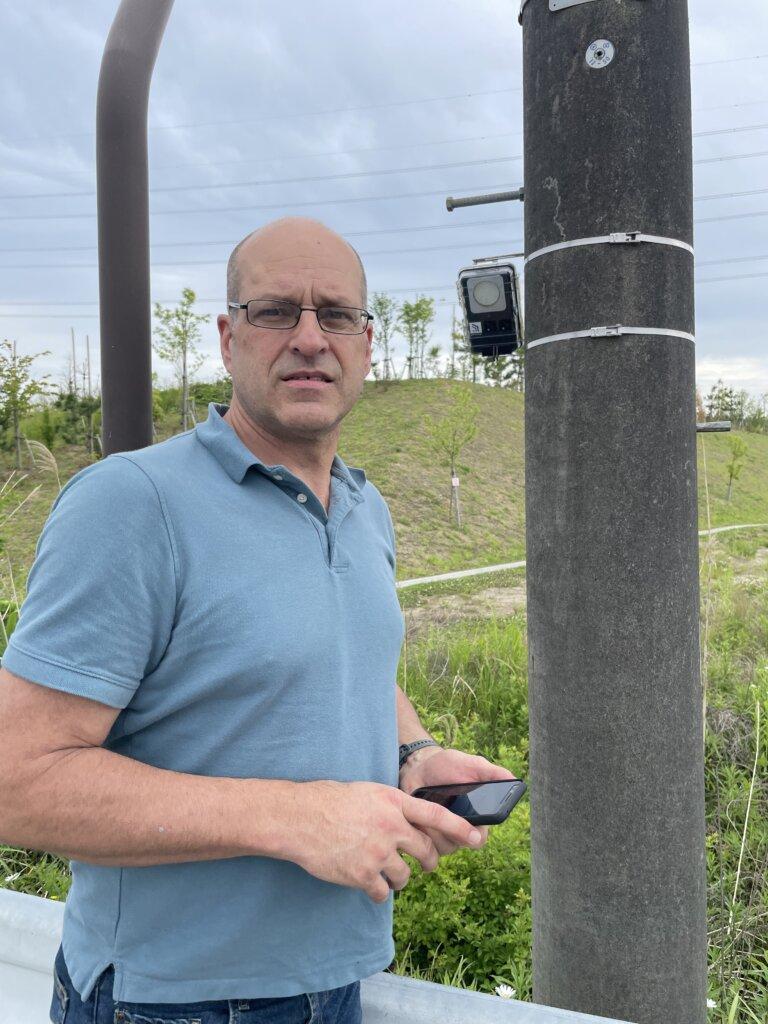
Driving towards the roadblock at the entrance to Fukushima Daiichi, where Safecast has a realtime sensor mounted on a telephone pole, we pulled the car over to check the radiation levels. This was the first time I got to use the bGeigie, which I was excited about. It was surprising to see that despite how simple the device is, the reliability aspect of it is stellar for providing information about radiation risks in areas such as Fukushima prefecture. I also got to experience what it was like checking on some of the real time monitors that Joe had previously set up around Futaba, even though near Fukushima Daiichi we were shooed away by suspicious security guards. Each monitoring location only took a couple of minutes to check up on, seeing that everything was still working, and radiation levels were still being transmitted.
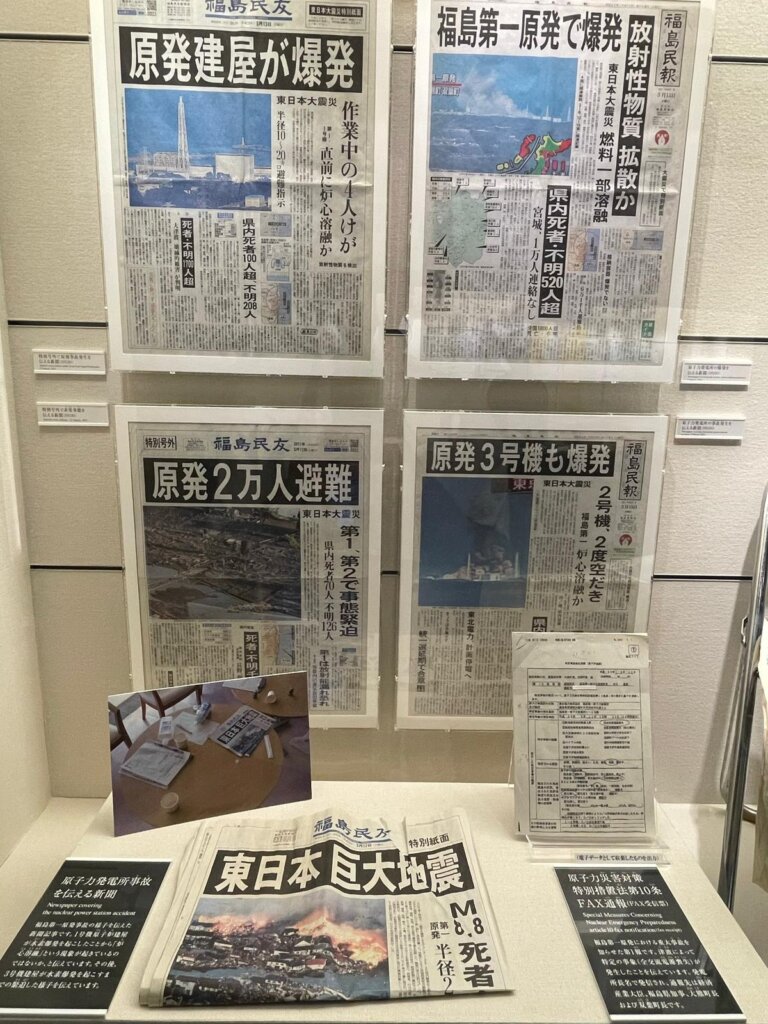
The Great East Japan Earthquake and Nuclear Disaster Memorial Museum was our next stop. Touring this museum surprised me, both in positive and negative ways. It had well produced, informative videos which both described the overall Fukushima disaster as well as actual victims of the tragedy explaining their story regarding how they were affected. There were also a lot of colorful diagrams that explained certain aspects of the disaster. Overall, the museum was very appealing to the eye. However, Azby and Joe pointed out many flaws the museum had. The way some data was either not presented in a clear way or skewed seemed to be apparent in many of the diagrams as well as some misinformation hindered how they presented the history of the Fukushima disaster. One aspect that the museum did present that I was unfamiliar with was the information about the SPEEDI system, which was intended to predict where radioactive plumes would go. Azby and I discussed this topic after I finished touring the museum and he explained that the government misinformed the public during the incident, with no information from SPEEDI being used to guide evacuations. It is hard to fathom how a simulation system failed in a time of such dire need and that the government completely crumbled under pressure during such a crucial time.
At the museum, I met Karin Taira, a friend and colleague of Azby and Joe’s who started a tour company called Real Fukushima, which shows foreign visitors around Fukushima. She wanted to know my thoughts on nuclear energy, my experience of interning with Safecast, and my two months of living in Tokyo. She was a very nice and easy-going person who wants to convey accurate information about the Fukushima disaster. I could tell she was extremely knowledgeable about the disaster and had a lot to share about the topic.
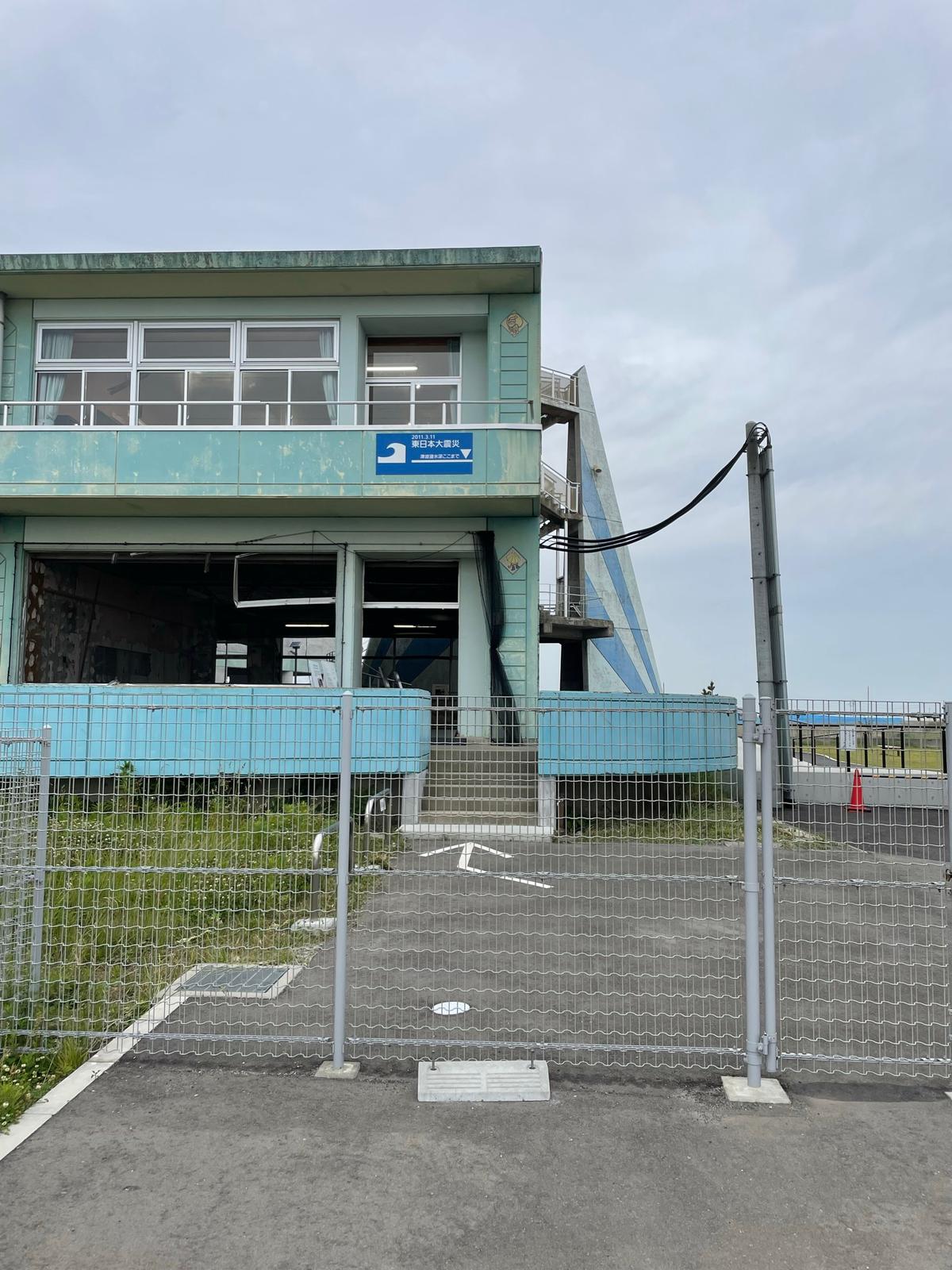
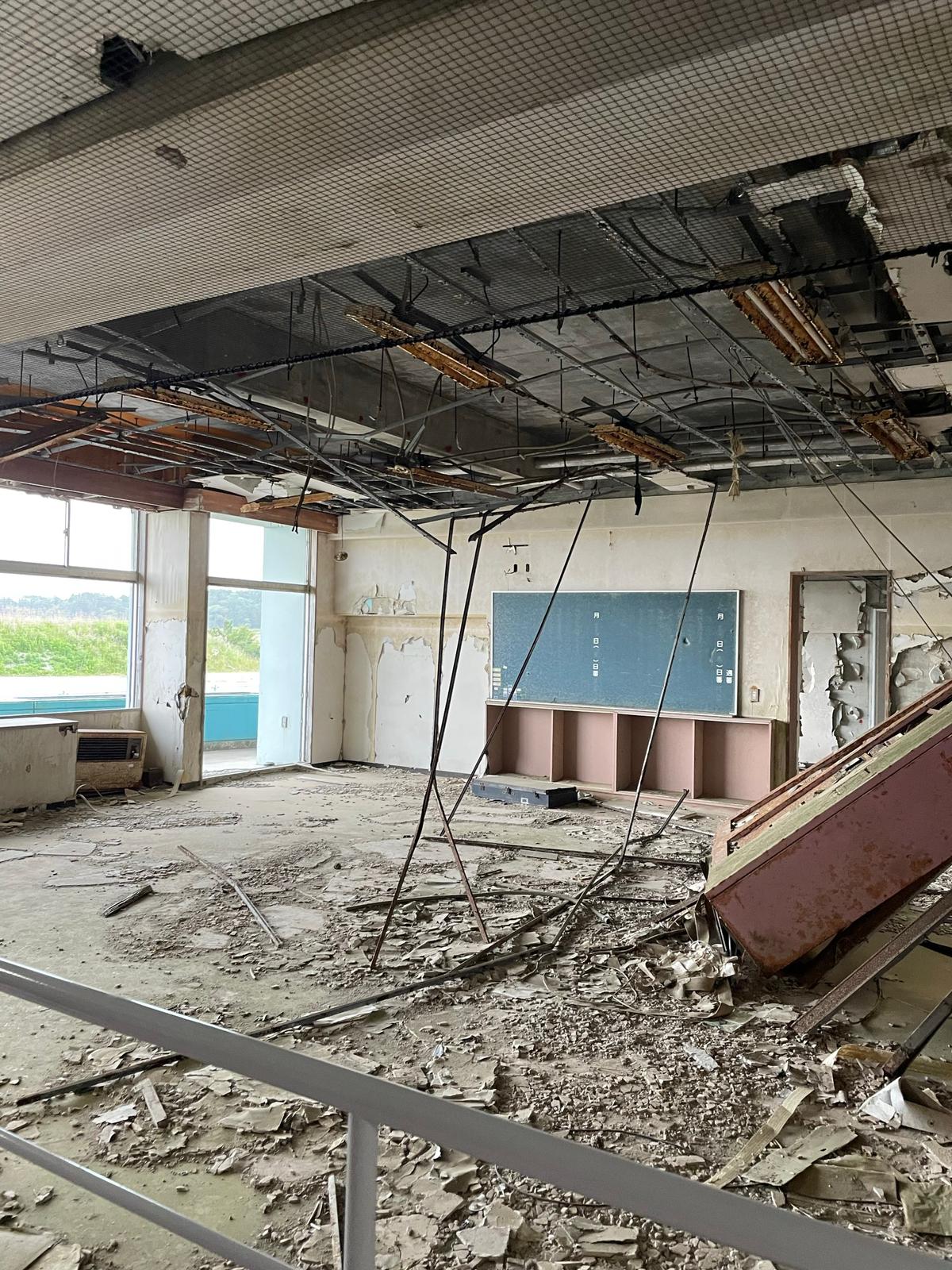
The next stop was an elementary school only a few minutes away from the museum, that can be entered for a small fee. This was the most eye-opening and jaw-dropping experience I had that weekend. When the Fukushima disaster occurred, I was a kid in elementary school with no worries in the world. Seeing the ruins of this elementary school vividly portrayed what kids who were a lot like me had to go through during March 11th, 2011. The destroyed classrooms left untouched, students’ stuffed animals and toys left behind, and the ripped gymnasium floor really put everything into perspective for me. Also, seeing the line showing how high the water from the tsunami reached, up to the second floor of the building, really seemed like it was impossible. The chaos, commotion, and fear that filled this school will never be forgotten by any of those students or teachers. It was good to learn that every student and teacher made it out safely, escaping to an elevated hillside over a kilometer inland from the school. Something that will always stick with me from touring this school was the untouched clock outside, telling the exact time the power cut out during the disaster when the tsunami hit. This may be one of the most eerie things I have ever seen, with the clock seemingly stuck in time, never escaping the moment of the disaster.

After a long afternoon of exploring Futaba and Ukedo, we headed further north to our home for the night in the town of Odaka, which was to my surprise a ryokan – a traditional Japanese inn called “Futabaya.” I had never actually gotten to stay in a ryokan, so I was very excited to see what the experience would be like, since I have always heard great things about them. Futabaya is run by Tomoko and Takenori Kobayashi, who were very welcoming. The food was also delicious, and the ryokan just had such a homey feel to it. It was also awesome seeing that others staying there as well as the owners were involved with collecting radiation data around their town and other parts of the prefecture. Overall, my overnight stay was memorable. I honestly think I got the best sleep I have gotten in Japan that night.
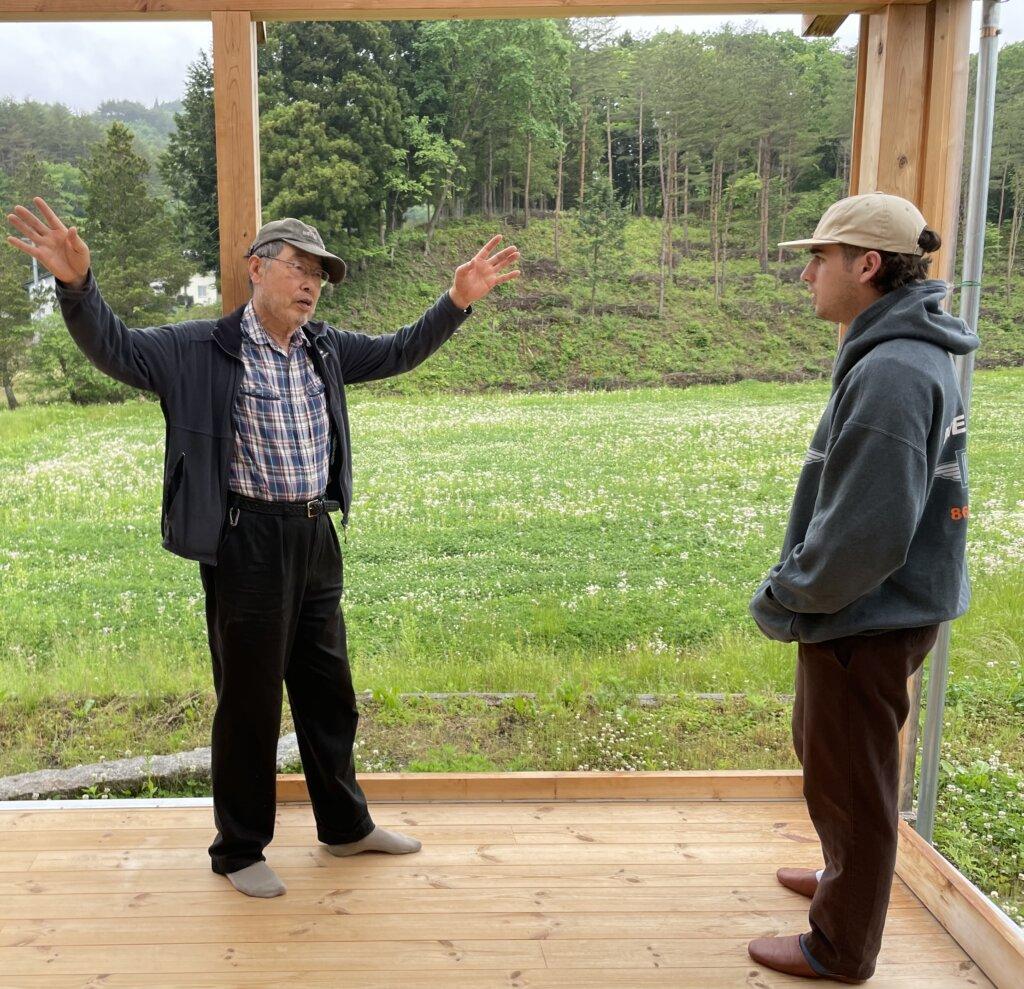
After eating breakfast the next morning, we headed to Iitate village. While driving, it was interesting to see the level of radiation increasing since we were headed in the direction of the fallout that occurred due to the meltdown. Like the other towns we visited, Iitate had been fully evacuated after the start of the disaster and reopened a few years ago. Once we got there, we went to a community center built by a group called the Fukushima Saisei-no-kai (Resurrection of Fukushima) where we met with Dr. Yoichi Tao, a nuclear physicist and co-founder of the group. Tao-san showed me around the wooden structure and explained that they used doors and windows salvaged from an abandoned elementary school to build parts of the building, such as the sliding doors that opened towards the forest behind. The greenery was unbelievable, with vast amounts of trees and land which the group uses to conduct experiments aimed at minimizing cesium levels in the trees. It was a truly stunning view.
The four of us entered a different wing of the community center and sat down for some tea. Tao-san eventually gave me a stack of documents, including pamphlets and his own research, which was a very interesting read. Listening to him talk, I could immediately see how passionate he was towards the issue of radiation, especially towards Iitate village. A few weeks prior, Azby had given me some articles to read that discussed the different viewpoints of people wanting and not wanting to reopen Iitate village for residents to return. Tao-san believes that Iitate has extreme promise to flourish in the future, which is why he wants to help people understand why Iitate village is safe for people to come back and move to. Although radiation levels are still higher than normal and there is cesium contamination in the soil, people’s actual radiation dose levels are less than 1 mSv/yr above normal, which shows the risk of being exposed to radiation in Iitate is not very high.
We then headed to a small shopping center, a “michi-no-eki” (“roadside station”), in the center of Iitate, to get lunch and observe how they measure radiation levels of all the local produce sold in the store. Produce sold there must be tested to make sure it is safe for consumption. Anyone can use the equipment to test their own food as well with no charge, which indicates how open stores are with these types of resources to ensure safety around the community. The data from these types of machines seems to back up Tao-san’s argument for opening up Iitate village. There are resources that ensure the safety of consumption, making the risk of consuming cesium-contaminated produce even smaller.
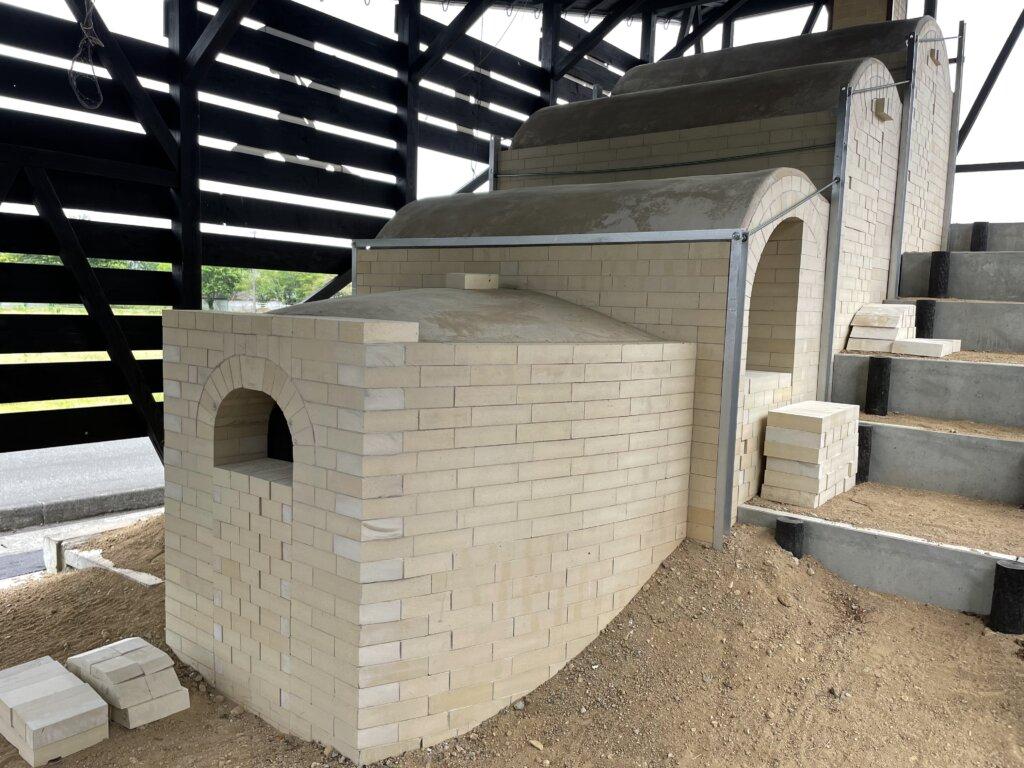
Our last destination before heading back to Tokyo was the town of Obori, in Namie. The drive there was beautiful, with one road having a perfect view of the never-ending lush mountains. I believe that road was called “Romance Road” because it is supposed to be a romantic drive. It was a little tricky because I was also navigating. Once getting to Obori, I quickly noticed the whole area was completely abandoned. No people, no movement, nothing, just a bunch of abandoned buildings and an occasional abandoned vehicle. Azby told me this town used to be famous for its clay pottery, with many exceptional potters living there in the past. The one place we went to in Obori that actually had life was a pottery center that appeared to be preparing to reopen in the near future. A new pottery kiln was being constructed there. There were many dead leaves around the trees surrounding the building, and I noticed that the radiation levels here were the highest I saw during the trip. I have learned during this internship that older leaves and branches often contain higher levels of radioactive cesium, so I was able to make that connection when seeing the plethora of dead leaves scattered on the ground. We then walked around the building to see if there was anything else worth checking out. There was not much, so we got back in the car and started our journey back to Tokyo.
I am extremely grateful for this trip to Fukushima. Getting the opportunity to go to such a unique area for an internship to learn more about what exactly happened, and the aftermath of the Fukushima disaster, was something I never thought I would get firsthand. This experience opened my eyes to how real the damage was in the prefecture, and how evident the effects still are. Although there still is a lot of work that needs to be done to restore areas such as Futaba, Iitate, and Obori, meeting people like Karin, Tao-san, and the Kobayashis reassured me that there is always a light at the end of the tunnel. These people are motivated and driven to make these parts of Fukushima blossom once again. They know they cannot change the past, so they do everything in their power to change the future.